|
|||||
|
|
|||||
|
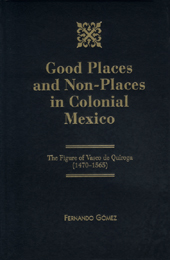
This work examines the interrelations between the abstract notions of "literature" (or the form of the letter) and the legal culture, colonization and utopianism (or political transformation), in relation to the historical figure of Vasco de Quiroga (1470-1565). High state official and judge of the Supreme Court or the Segunda Audiencia, and later first bishop of the state of Michoacan, Vasco de Quiroga is still celebrated for the alternative community models he established for the Purepecha Indians. This study offers the most complete approach to date to the writings directly attributed to this state official of the Spanish empire (letrado hidalgo indiano), and to the scholarship around him. This work provides critical readings of Quiroga's texts including the Rules and Regulations for the Government of the Hospitals of Santa Fe de Mexico and Michoacan (1532), Informacion en Derecho (1535), De Debellandis Indis (1552) and the Juicio de Residencia (1536), and relates them to more widely known figures such as Ginés de Sepúlveda, Bartolomé de las Casas, Bernal Díaz del Castillo and Francisco de Vitoria. Gomez addresses salient textual problems concerning the relationship between "colonial writing" and the theory and practice of Spanish Law, orality and performativity, and the manufacturing of authorship and authority. The book frames problems associated with the field of Colonial Latin American Studies in relation to the humanities across the Atlantic. The work dialogues with scholars such as O'Gorman, Bataillon, Zavala, Acuña, Pagden, Maravall, Abellan, Mignolo, Adorno and others. This book will be of interest to all those engaged in the history of literature, legal studies, utopianism, Hispanic/Spanish studies of the Early Modern Period, Colonial Latin American Studies and Golden Age Studies. |
|||||